Arenastaden – from industrial area to one of Sweden’s most sustainable urban districts

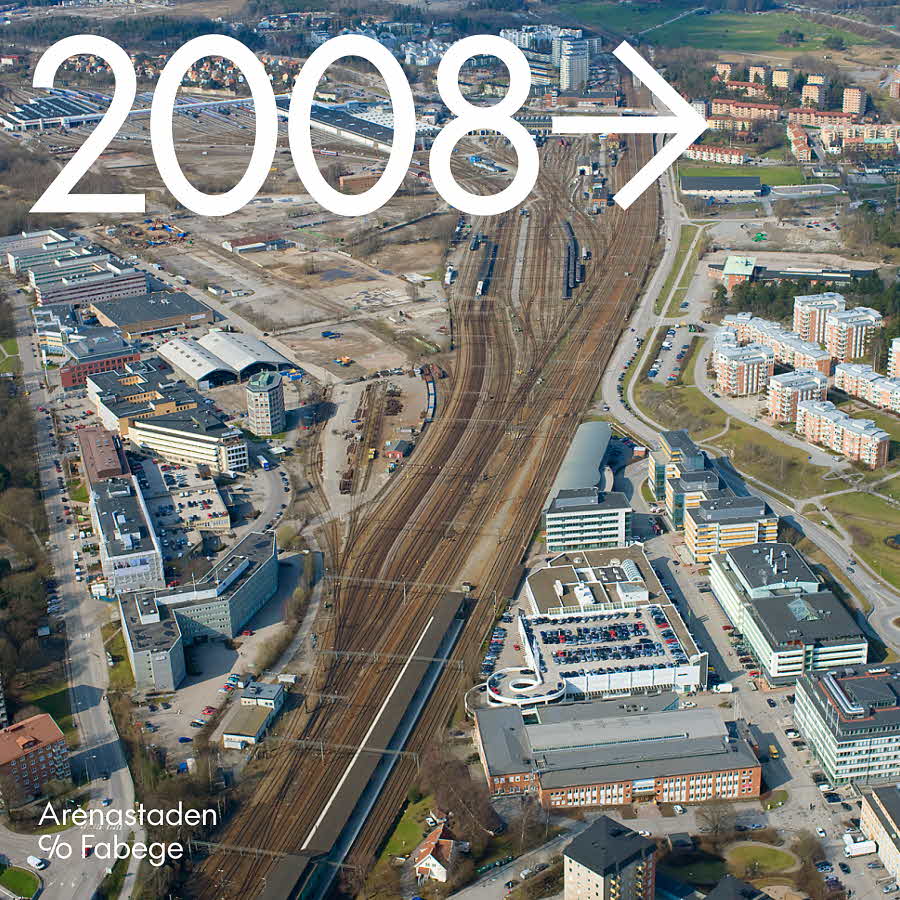
In 2007, the area we now know as Arenastaden was something entirely different. Along Dalvägen stood a run-down industrial zone where scrap metal was sold by the kilo. It was far removed from the vibrant, dynamic urban district we see here today. But Erik Paulsson and we at Fabege saw the potential of the location next to Solna Station and began developing the area into something completely new.

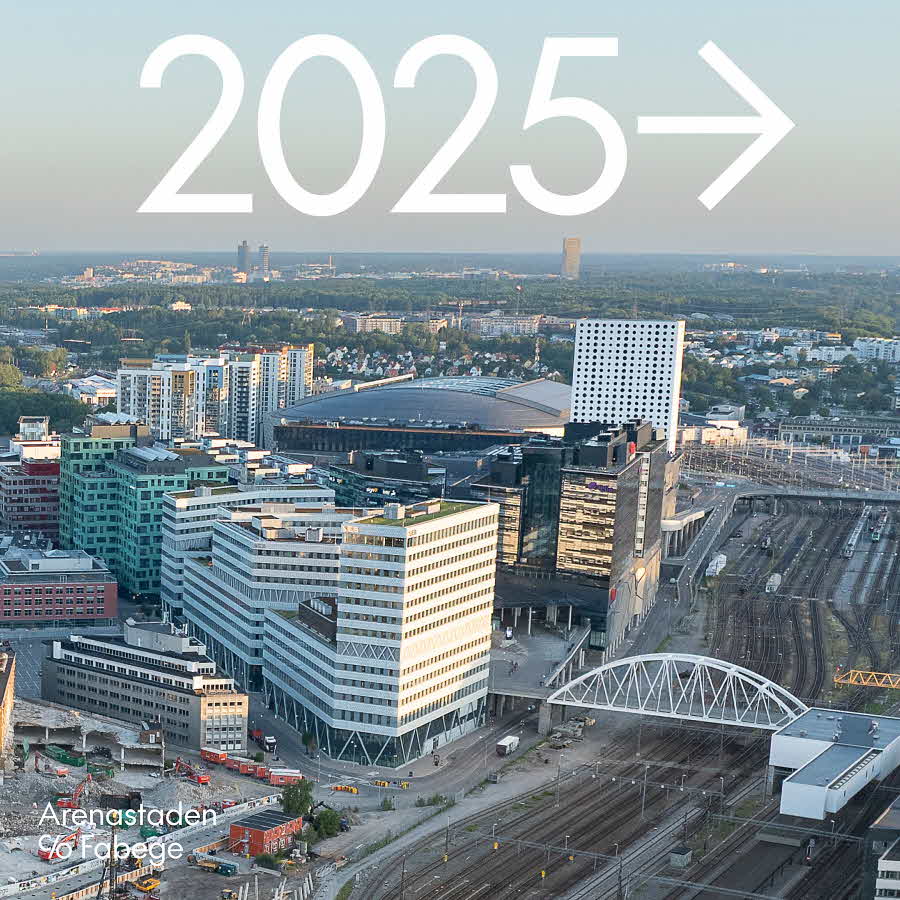
– What was once poorly utilised industrial land has been transformed into a modern, vibrant urban district. From the very beginning, the vision has been clear – to create a place where people want to be, work and live, says Johan Zachrisson, Head of Business Development at Fabege.

A city that lives around the clock

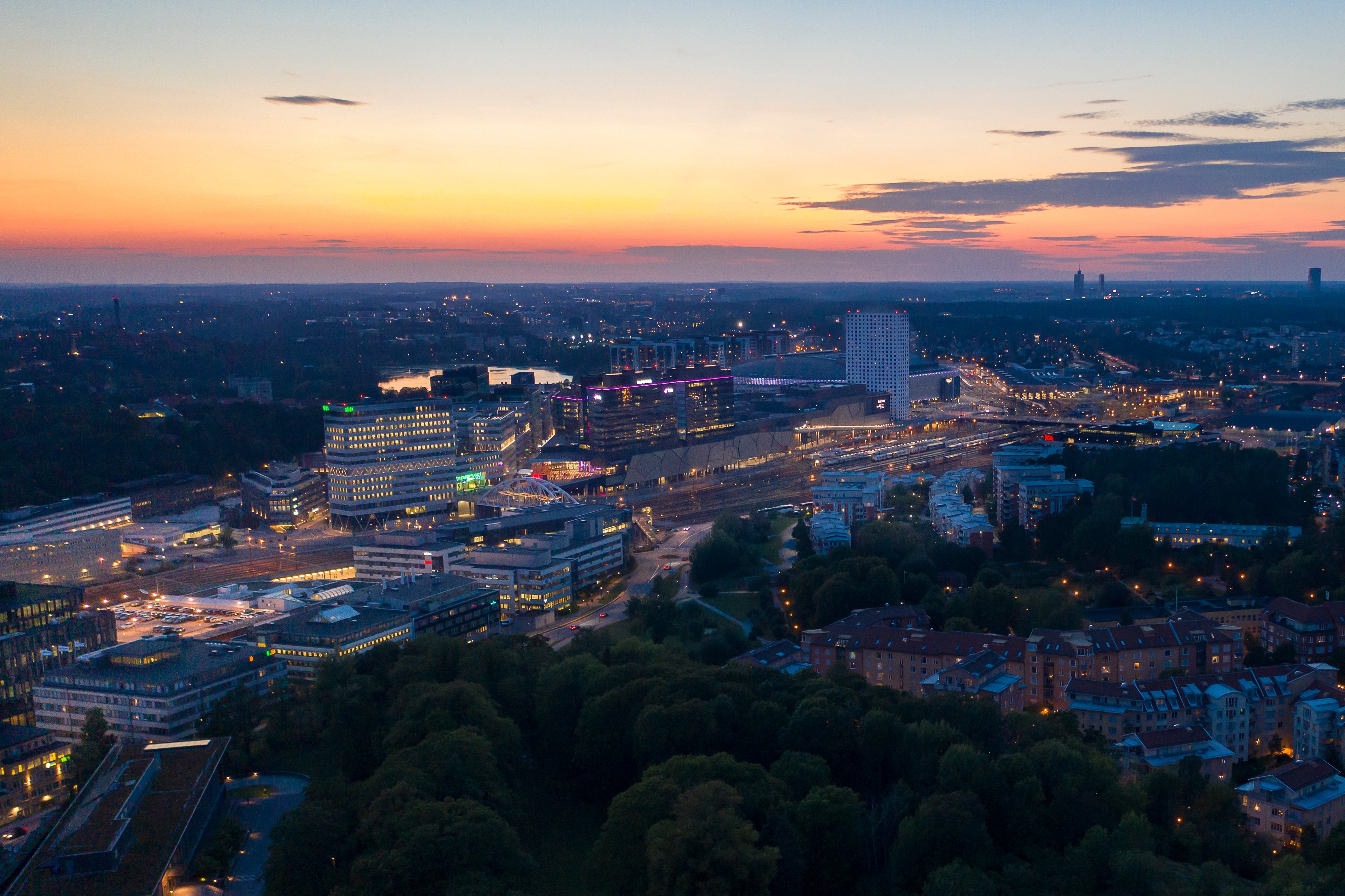
Arenastaden attracts around 15 million visitors every year. The national arena, Strawberry Arena, hosts global superstars such as Taylor Swift and Bruce Springsteen alongside events like Techarenan and Melodifestivalen, while Westfield Mall of Scandinavia is one of the largest shopping centres in the Nordics. But the area is more than its landmarks. It is home to tens of thousands of workplaces, and several of Sweden’s largest companies have chosen to locate their headquarters here.

At the same time, Arenastaden continues to grow as a residential area, where contemporary urban development sits alongside the classic stone-built neighbourhoods of Gamla Råsunda. The area offers rooftop townhouses atop the shopping centre, modern duplex apartments, and charming older quarters with pedestrian walkways, parks, and close proximity to Hagaparken and Råstasjön.

– Arenastaden is a place that today offers much of what people need to thrive – excellent transport connections, top-class services, modern workplaces and homes close to green spaces. That’s why it’s only natural for us to continue developing the area into an even greener and more welcoming urban district in Stockholm, says Hanna af Sandeberg, Market Area Manager for Arenastaden.
High ratings from tenants

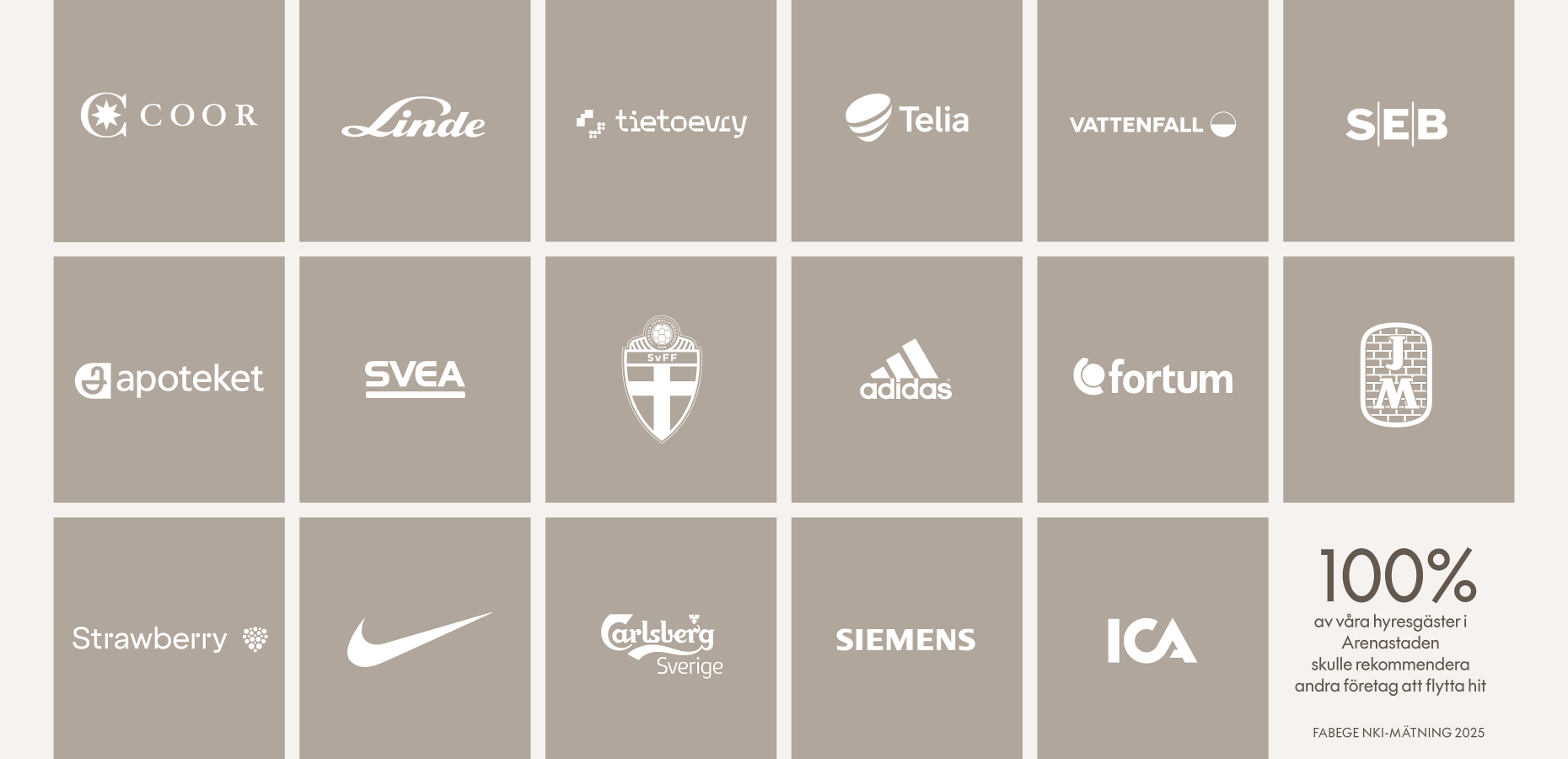
Today, Arenastaden is home to companies such as SEB, Telia and Vattenfall, all of which have chosen to locate their headquarters or Nordic hubs here – and that is no coincidence.

– We’ve succeeded in attracting strong, long-term brands because we can offer a holistic environment. It’s not just about square metres, but about creating attractive workplaces and a meaningful context, says Linn Dahlberg, Head of Customer and Product at Fabege.

In our most recent customer satisfaction survey (NKI), we achieved a score of 87 out of 100 in overall satisfaction among office tenants in Arenastaden – an exceptionally strong result for the industry. Even more telling is that 100 per cent of respondents would recommend other companies to relocate here.

– Arenastaden is a dense, urban environment. We must take responsibility for how the area functions – everything from logistics and safety to vibrancy, dining options, hotels and meeting places. It’s this holistic approach that sets us apart, says Hanna af Sandeberg.

A selection of major companies that have chosen to locate their offices in Arenastaden. 100% of Fabege’s tenants recommend other companies to relocate here.

Sustainable urban development from the ground up

Arenastaden has been developed on previously underutilised land rather than on untouched natural areas. By building densely, resource-efficiently and energy-efficiently in a location close to nature and with excellent public transport, climate impact is reduced while spaces for people and businesses are created. Our properties in the area now have energy consumption levels well below the average for Swedish office buildings.

– Our property management operations will be climate-neutral by 2030, and by then we will also have halved the climate impact of our construction projects. Several of our most climate-smart buildings are located in Arenastaden, including Scandinavia’s first zero-energy hotel, says Linn Dahlberg.

Climate-smart commuting and a growing regional hub

Our travel behaviour survey, conducted together with CERO (Climate and Economic Research in Organizations) and involving more than 6,500 employees working in Arenastaden, shows that climate impact from commuting has decreased by 45 per cent over the past three years – surpassing the Paris Agreement’s targets for 2030.

– It’s proof that behavioural change is possible, but also that public transport is accessible and works well, says Johan Zachrisson.

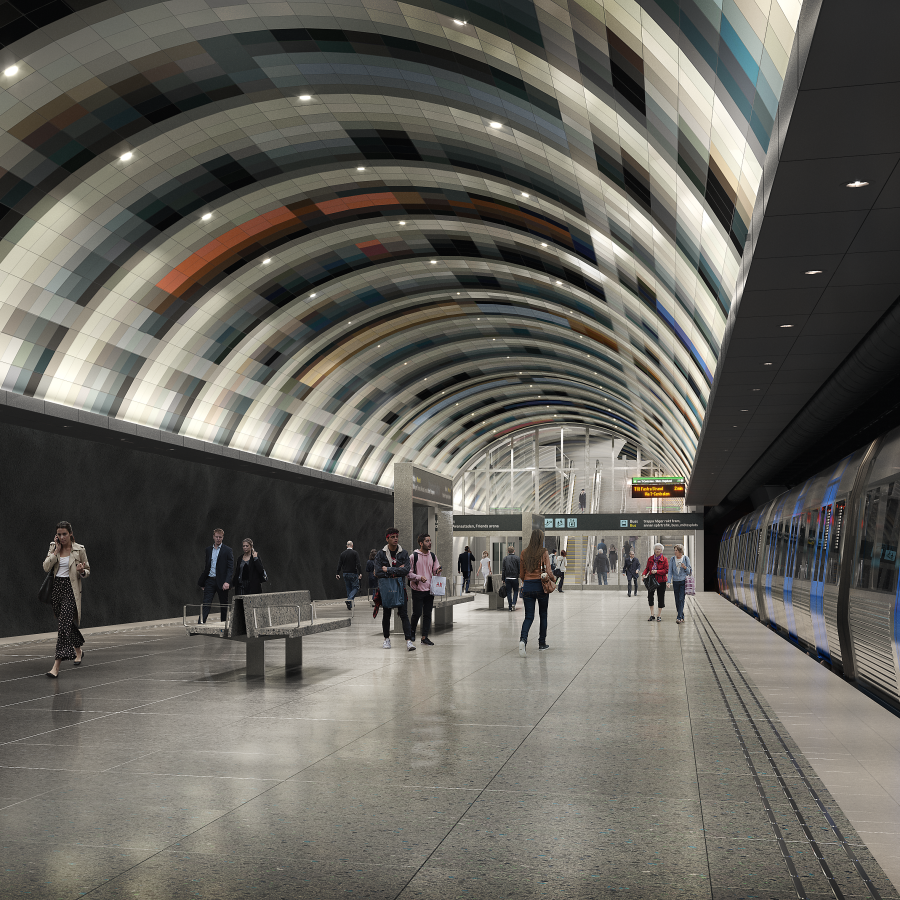
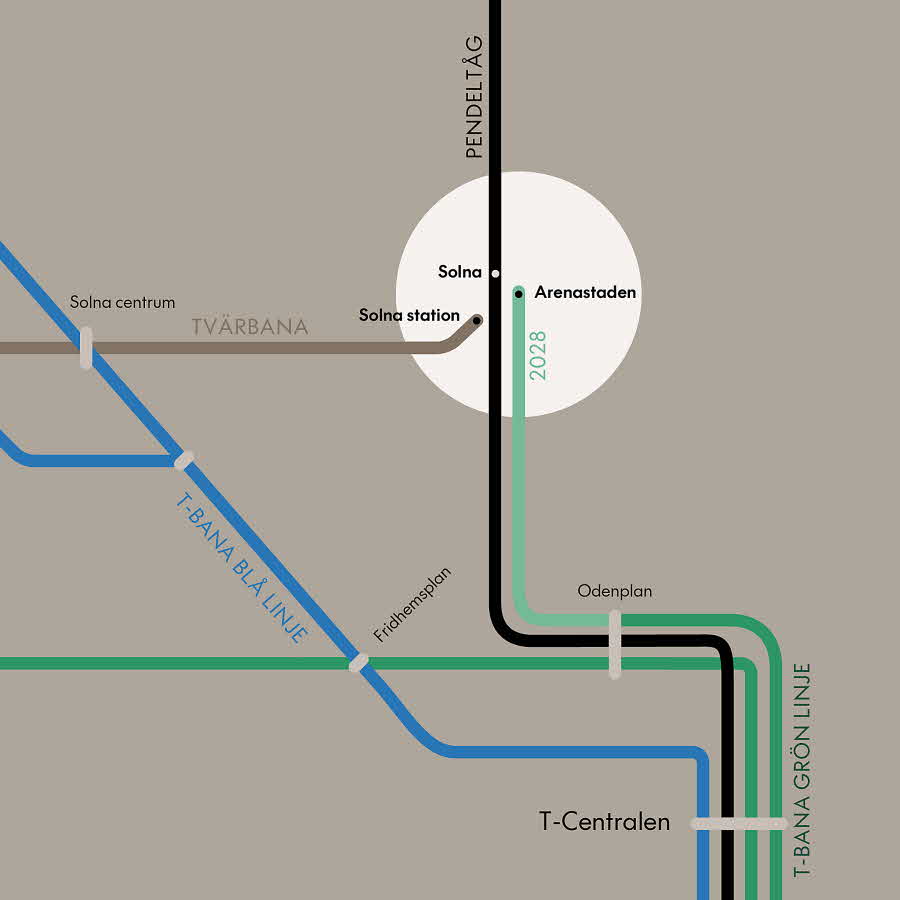
The future looks even brighter. In 2028, the Green Line of the Stockholm metro will open, with a station located in the heart of the area. In the longer term, there is also the potential to create a major regional transport hub with Arlanda Express and long-distance trains – relieving pressure on Stockholm Central Station and strengthening accessibility and growth across the entire region.

Green Line to Arenastaden – service begins in 2028.

Green Line to Arenastaden – service begins in 2028.

Northern Stockholm’s largest transport hub.

Northern Stockholm’s largest transport hub.

Climate-smart commuting and a growing regional hub

Our travel behaviour survey, conducted together with CERO (Climate and Economic Research in Organizations) and involving more than 6,500 employees working in Arenastaden, shows that climate impact from commuting has decreased by 45 per cent over the past three years – surpassing the Paris Agreement’s targets for 2030.

– It’s proof that behavioural change is possible, but also that public transport is accessible and works well, says Johan Zachrisson.

The future looks even brighter. In 2028, the Green Line of the Stockholm metro will open, with a station located in the heart of the area. In the longer term, there is also the potential to create a major regional transport hub with Arlanda Express and long-distance trains – relieving pressure on Stockholm Central Station and strengthening accessibility and growth across the entire region.

Sustainable transport in everyday life

To reduce heavy traffic, we have launched Urban Services together with Ragn-Sells – a local last-mile solution where smaller electric vehicles handle deliveries, returns and recycling. Each month, around 3,500 deliveries are coordinated at the transhipment hub in Westfield Mall of Scandinavia before being distributed using electric vehicles. This reduces the number of trucks, increases safety and improves service levels.

– This is something we see continuing to grow. It’s not only smart from an environmental perspective – it also enhances service for our tenants, says Hanna af Sandeberg.

The next chapter takes shape here

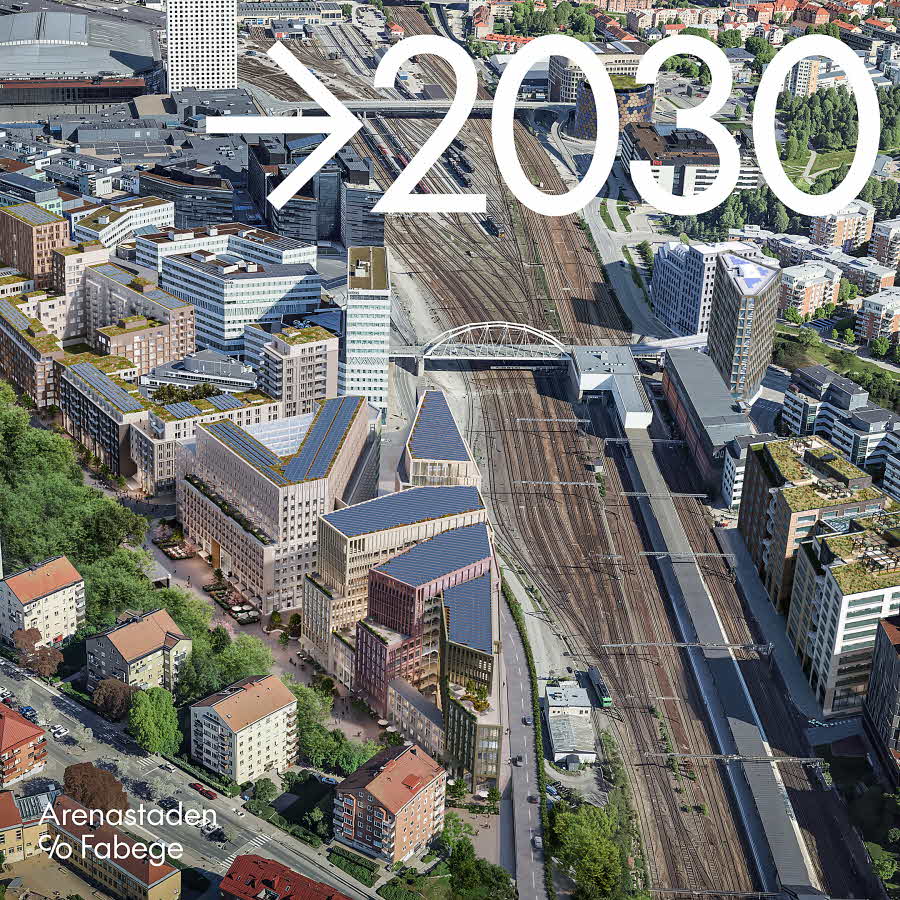
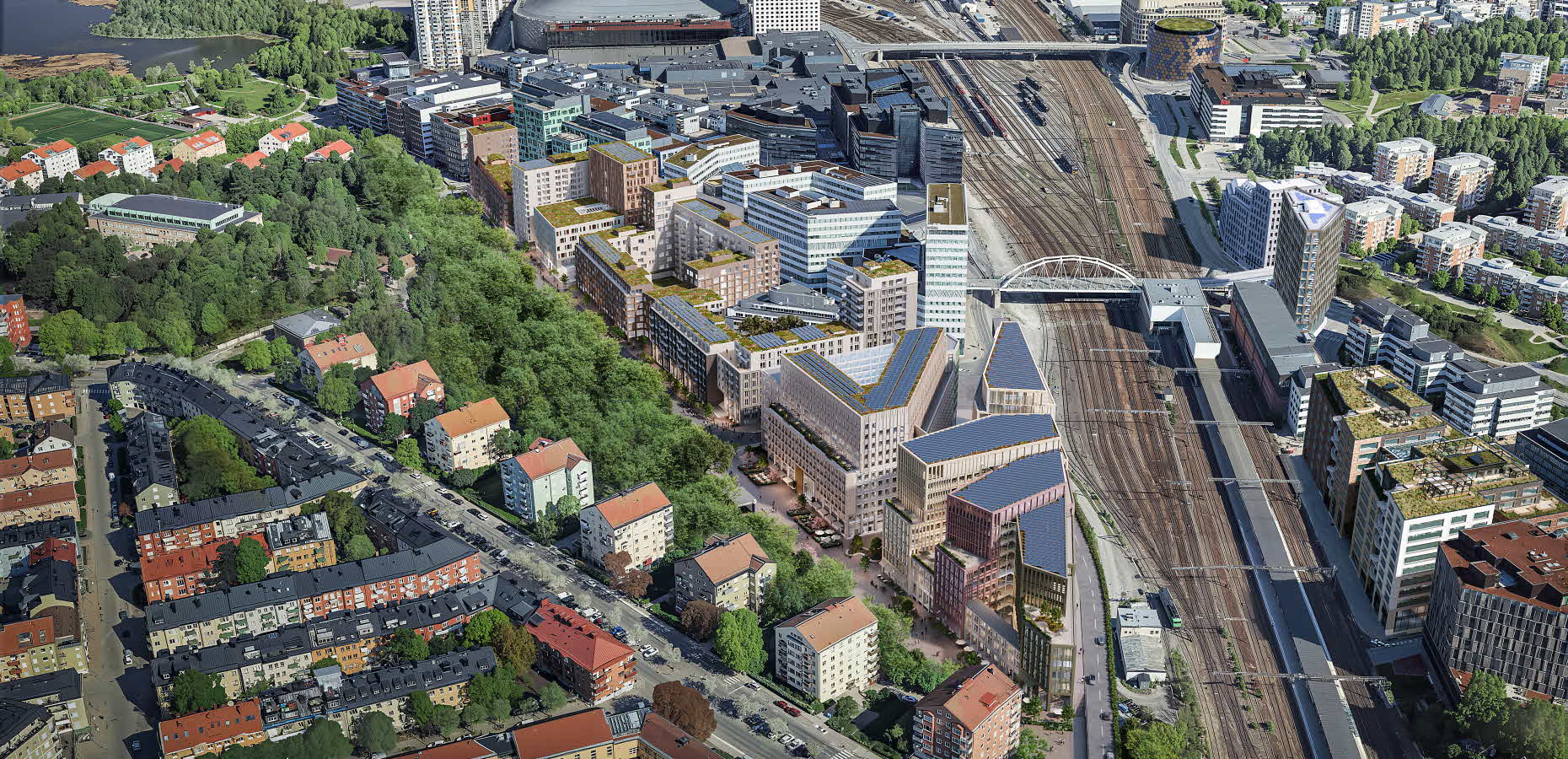
The development of Arenastaden continues, with the next major phase taking place along Dalvägen, opposite the new metro station. Plans include office blocks with thousands of workplaces, 700 new homes, and restaurants and services at street level.

And as we look ahead, we don’t just see more buildings – we see an even more integrated and vibrant urban district. At the same time, we remain humble in the face of rapid societal change.

– Ten years ago, we had no idea we would experience a pandemic, a new security situation in Europe, or the rapid development of AI. But people don’t evolve at the same pace as technology. That’s why we believe fundamental needs such as safety, diversity, greenery and accessibility will remain central, says Linn Dahlberg.

For us, it’s not about chasing the next trend, but about building long-term with people at the centre.

– The buildings we construct today will stand here for many years. Our responsibility is to ensure that they continue to function well far into the future, concludes Johan Zachrisson.

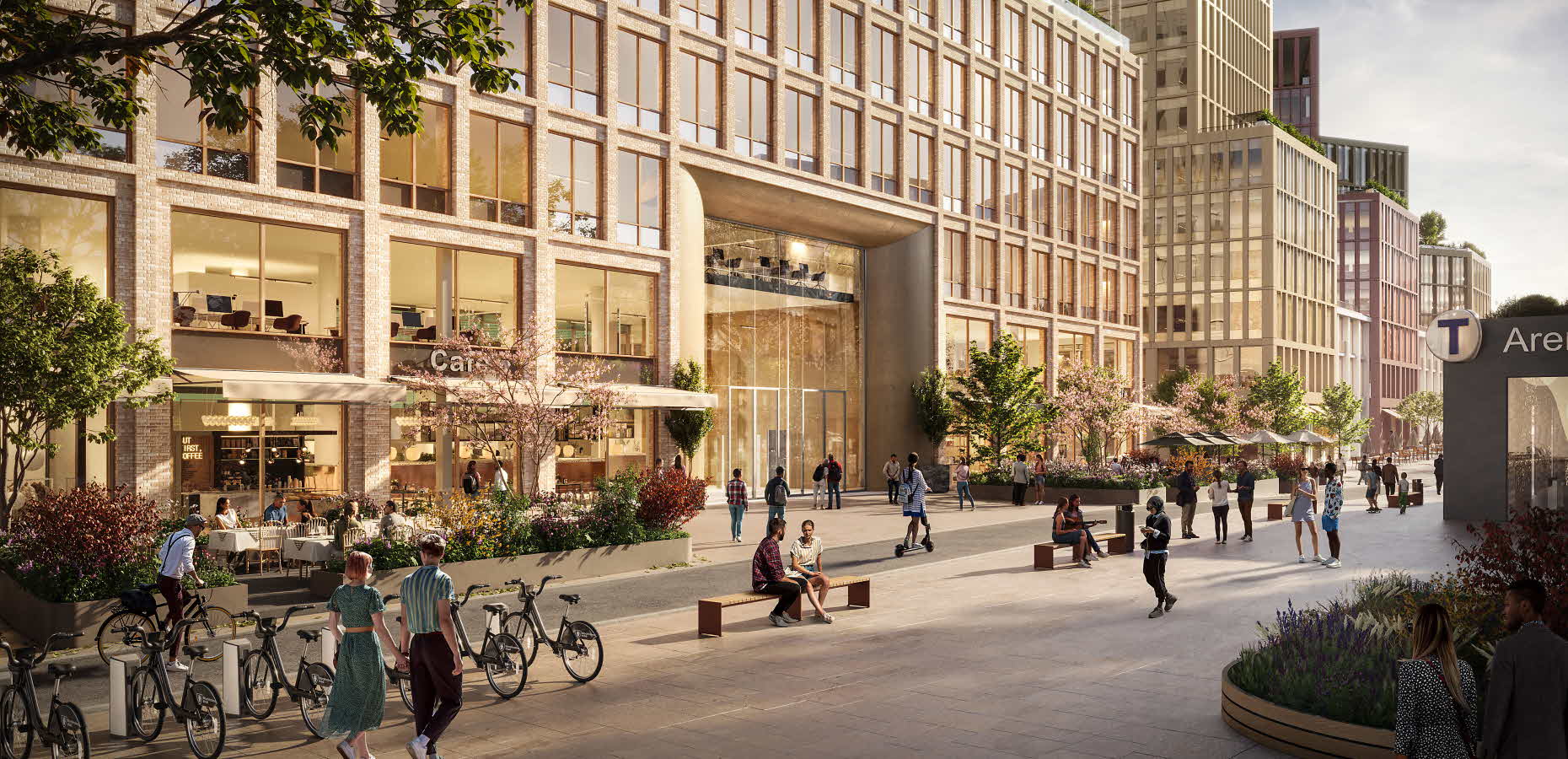
Along Dalvägen in Arenastaden, several thousand additional workplaces will be added, together with 700 new homes, a new Underground station entrance, and a wide range of restaurants and services.

Created: 17 December 2025

read also

Arenastaden

In Arenastaden you'll find Sweden's largest arena and Scandinavia's largest shopping mall. But also the more intimate Ha...
Read more

CERO - travel behaviour survey

o create even more sustainable urban districts where our tenants can operate and thrive, we use a variety of tools – one...
Read more