The path to carbon neutral property management
Our ultimate long-term goal is for Fabege’s property management to be carbon neutral by 2030, as measured in tonnes CO2e. By this we mean that we will have control over all the emissions associated with our operations, and we will minimise emissions to the greatest possible extent using the tools available. All the electricity we buy is renewable electricity from wind sources. We will compensate for emissions over which we have no control via carbon offsetting, for example investments in additive technology that reduces the amount of carbon dioxide in the atmosphere.
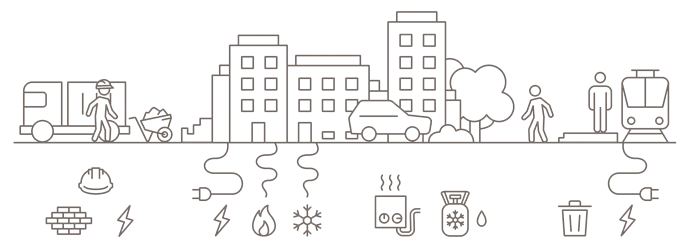
Our greenhouse gas emissions mainly arise from property management and project development. To reduce our climate impact, we are working on making energy efficiency improvements, increasing the share of renewable energy and reducing our carbon footprint throughout the value chain. We want to be at the forefront with our sustainability efforts, and inspire our own business, as well as our customers and industry colleagues.
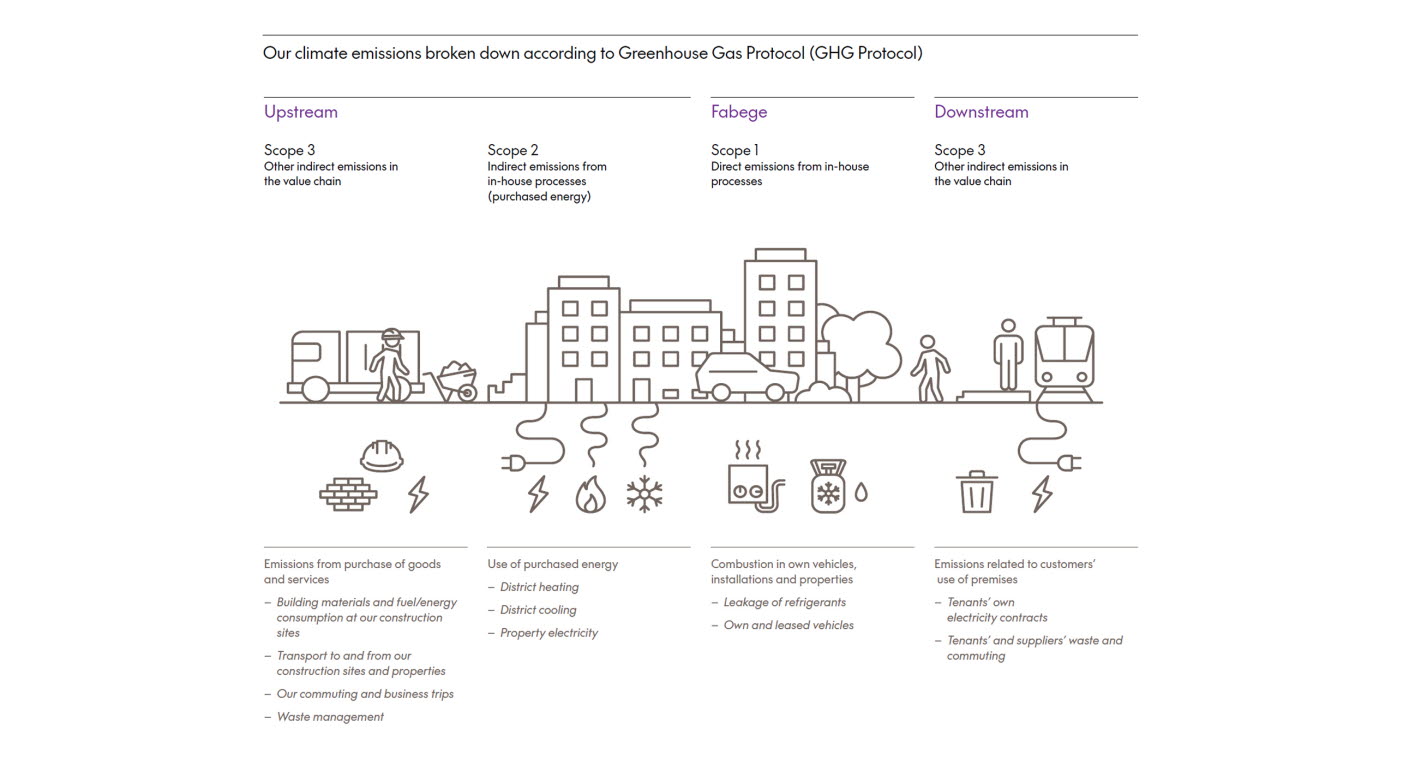
 To limit the climate impact of our management, we focus on reducing direct and indirect emissions (Scope 1 and Scope 2). The targets and roadmap that we have established to support the Paris Agreement via the Science Based Targets initiative (SBTi) form the backbone of Fabege’s work on climate issues. The SBTi target is to halve Scope 1 and 2 emissions by 2030 at the latest, with a base year of 2018, and a commitment to measure and reduce our Scope 3 emissions.
Our own climate targets go further than the above SBTi targets. Our overall target is for our property management (Scopes 1 and 2) to be carbon neutral by 2030. This means having control over and reducing all emissions linked to our business activities by 90 per cent. Any emissions that cannot be eliminated will be offset by investments in technologies that reduce carbon dioxide in the atmosphere. In our property development, we aim to halve emissions per built square metre (Scope 3 per GFA) by 2030.
See the latest target outcomes