Sustainable mobility

Reducing a district’s carbon footprint is not only about its buildings, but also about its transport systems.

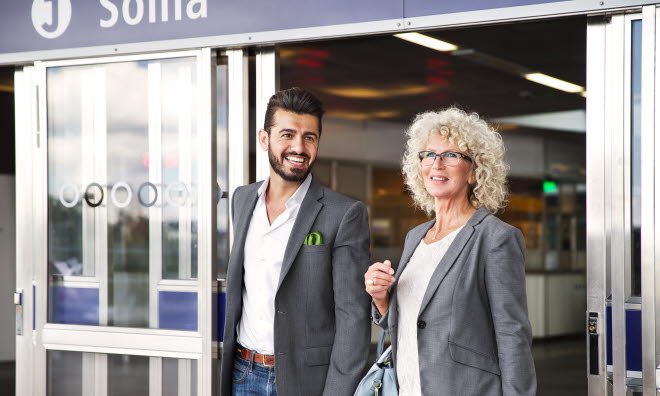
How people travel to and from work has a significant impact on both accessibility and emissions from the district. A large proportion of our customers choose public transport, but we are also seeing increased demand for parking spaces and electric vehicle charging facilities.

Electric cars, charging points and carpooling

To make it easier for our customers’ employees to choose transport options with a lower carbon footprint, we are continually installing charging points for electric vehicles at our properties and in street environments. We can currently offer 2,400 charging points. We are also helping to develop mobility hubs that provide sharing services for cars and bicycles, as well as dry cleaning, food deliveries and similar services. Since 2017, our entire service vehicle fleet has consisted of electric vehicles.


Travel habits: analysis and action plans

We use the CERO (Climate and Economic Research in Organizations) process tool, which aims to reduce emissions associated with travel to and from our properties. CERO is described in Fabeges English-language material as a scientifically developed process-management model from KTH Royal Institute of Technology.

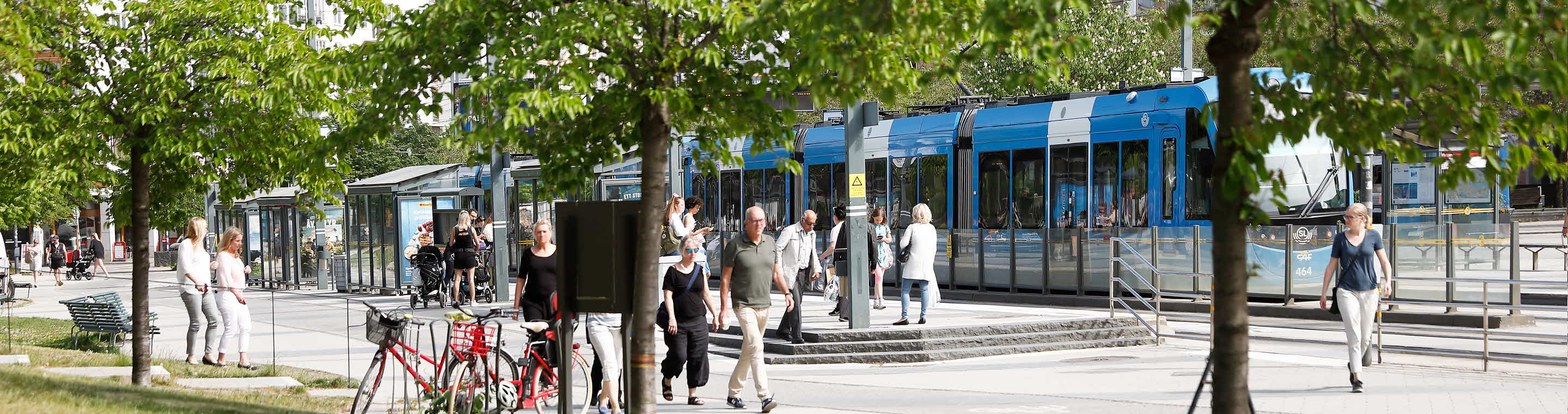
Together with companies in Arenastaden, the municipality, Keolis and MTR, we have established a network that has developed an action plan to further increase the proportion of journeys made by public transport, bicycle, on foot and by electric vehicle. In addition to expanding the number of charging points for electric vehicles, the planned measures include improved cycle paths, new and/or improved public transport connections, and a wider range of sharing services for electric cars, electric mopeds and electric bicycles.

Read more about our results
 

Cooperation for shared transport

In Arenastaden, we collaborate with Ragn-Sells through Urban Services, a company that we co-own. The purpose of the collaboration is to consolidate the transport of goods and waste into and out of the district using fossil-free, low-noise transport.

A central element of the initiative is a consolidation centre where all suppliers drop off and collect parcels. Parcels destined for shops and offices in the area are then delivered together in electric vehicles in a coordinated and structured manner.

In 2022, approximately 50 per cent of our tenants in Arenastaden had some form of agreement with Urban Services.

Changed 29 October 2026

Read more

CERO - travel behaviour survey

o create even more sustainable urban districts where our tenants can operate and thrive, we use a variety of tools – one of which is travel behaviour surveys.

Read more